


Top picks from this guide
 #1
#1
April to October: the dry season
The southeast trade winds keep rain away and rivers low, so less sediment washes into the sea. From roughly April to October you get the most consistent visibility across the whole island, with the middle of that stretch usually calmest. It is also high season, which means fuller boats at the famous spots — book a morning departure and you barely notice.
 #2
#2
November to March: the wet season
Rain does not fall into the sea and ruin it; the problem is runoff. Rivers push sediment out after heavy storms, and bays near river mouths turn cloudy for a day or two. Between storms the water can be genuinely clear. Wet-season snorkeling is a game of choosing sheltered coasts and going the morning after a dry night.
 #3
#3
Mornings, whatever the month
The daily wind cycle matters more than the calendar. Most days start near-windless, then an onshore breeze builds from late morning and chops the surface, stirring sand in the shallows. A calm 7 a.m. start in January often beats a windy 2 p.m. start in August, which is why every serious snorkel operator in Bali runs morning departures.
 #4
#4
Padang Bai's sheltered coves
Blue Lagoon and the coves around Padang Bai face away from the prevailing swell, and no large river empties beside them. That combination keeps them swimmable through most of the wet season, when parts of the west coast turn brown. It is the classic bad-weather backup: a short drive from the resort areas, easy entry, calm shallow water.
 #5
#5
The Nusa Penida channel
The strait between Bali and Nusa Penida moves a huge volume of ocean water on every tide, which flushes the sites along Penida's coast clean. Visibility there stays strong even in months when mainland beaches look murky. The trade-off is movement: sites are drift-prone, and crossings get bumpy once the wet season's afternoon weather builds.
 #6
#6
The Gili Islands
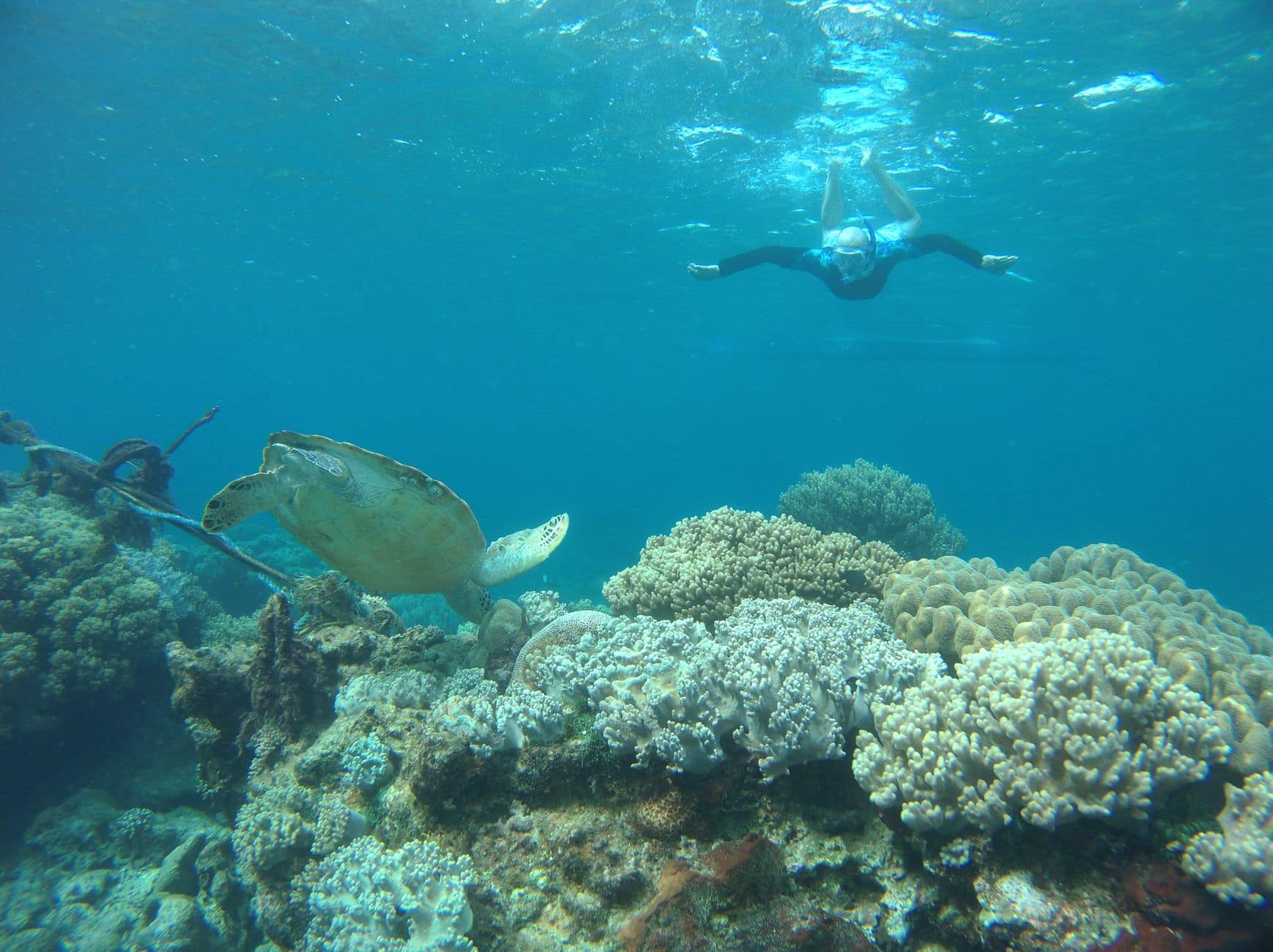
The three Gilis sit off Lombok in open water with no rivers anywhere near, so visibility barely registers the seasons. If your dates fall in January and you want the closest thing to a guarantee of clear water, this is the strongest option in the region. The cost is distance — it is a long boat ride and a big day.
 #7
#7
Manta season at Nusa Penida
Reef mantas live at Penida's southern points year-round, which surprises people expecting a short season. Sightings dip when big south swells close the sites, mostly in the wet months, and plankton blooms can trade a little visibility for more actively feeding mantas. If mantas are the goal, go early in the day, favour the drier months, and keep a spare morning.
How Bali's two seasons actually change the water
Bali has two seasons, not four. The dry season runs roughly April to October: steady southeast winds, little rain, low rivers. The wet season runs November to March: humid, with storms that usually build through the afternoon. Water clarity follows the rivers more than the rain itself — a downpour over the mountains sends brown water out of the river mouths, and the nearest bays wear that stain for a day or two. Coasts without big rivers recover almost immediately, which is why east Bali and the offshore islands keep working nearly all year while stretches of the west coast go through murky spells.
That is why locals answer the question 'when is the water clear' with another question: clear where? A west-coast beach in February can be a different planet from a Blue Lagoon snorkeling morning at Padang Bai on the very same day. If you only remember one thing from this guide, make it this: in Bali, geography beats the calendar. Pick the right coast for the season you are in, and there is honestly no bad month to put a mask on — pick the wrong one, and even July can disappoint you.
The morning rule beats the month rule
Across the whole island the sea breeze follows the same daily script: near-calm at dawn, a building onshore wind from late morning, chop and stirred-up shallows by early afternoon, then it often settles again toward sunset. That cycle affects what you see underwater more than the month on the calendar does. It is also why our snorkeling departures leave early — not because operators enjoy alarm clocks, but because the difference between 7 a.m. water and 1 p.m. water at the same spot can be dramatic. If you take one practical step after reading this, make your boat or beach plan a morning plan, in either season.
Where to go when the water turns cloudy
When your dates land in the wet season, or a storm has just rolled through, this is the pecking order we actually use: Padang Bai — sheltered, close and river-free; the default bad-weather call and an easy half day. Amed and Tulamben — the northeast coast misses most of the southern swell; our Amed and Tulamben snorkeling guide covers it in detail. The Nusa Penida channel — tide-flushed and reliably clear, but current-prone, so go with a crew that reads conditions daily. The Gili Islands — the furthest option and the most weatherproof; we compared the trade-offs honestly in Gili Islands vs Nusa Penida.
For calm mainland days between boat trips, start with our list of the best beaches in Bali with crystal-clear water — it ranks the shore-entry spots by how well they hold up when conditions are mixed. The short version: sheltered east-facing bays are your friends from November to March, and almost everything works from May to September. If a specific beach is the reason you came, check which coast it sits on before you lock your dates rather than after.
Manta season, honestly
Mantas are the one marquee animal people try to time, so here is the honest version. The reef mantas at Nusa Penida's southern points are resident — they are seen in every month of the year, not just a short window. What changes with the season is access: big south swells, more common in the wet months, sometimes close Manta Point for the day, and boats divert or turn back. On a Manta Point snorkeling trip from $29 you are betting on conditions as much as on the animals, so build your Penida day early in your trip. That way, if the ocean says no, you still have days left to try again — booking over WhatsApp with no prepayment makes the reshuffle painless.
FAQ
What is the best month for clear water in Bali?
The most dependable stretch is May to September, inside the April-to-October dry season: low rivers, steady visibility and calm mornings almost everywhere. April and October are honest shoulder picks — slightly less certain, noticeably quieter. If your only free month is in the wet season, you can still find clear water; you just choose the coast more carefully.
Is the water in Bali clear during the rainy season?
Often, yes — just not everywhere at once. Rain hurts visibility mainly through river runoff, so bays near river mouths cloud over for a day or two after storms, while river-free coasts like Padang Bai and the offshore islands stay clear. From November to March, book morning starts and keep your plans flexible by a day.
What time of day is the sea clearest in Bali?
Morning, in both seasons. The onshore breeze typically builds from late morning, chopping the surface and stirring sand in the shallows, and boat traffic peaks around midday at the famous spots. Aim to be in the water between 7 and 10 a.m. — that window does more for what you will see than switching months ever will.
When can you see manta rays at Nusa Penida?
All twelve months — the reef mantas at Manta Point are resident, not migratory. What varies is whether boats can reach the site: big southern swells, more frequent in the wet season, occasionally close it for the day. Crews report the smoothest, most consistent runs in the drier months, and the trip starts from $29 per person.
Is Bali's sea warm enough to swim year-round?
Yes. Water temperature sits around 27-29°C in every month, so you never need more than a rash guard, and that is for sun rather than cold. The variable worth planning around is not warmth but clarity and surface chop — which is why this guide talks about coasts and mornings instead of temperatures.
Which part of Bali has the clearest water overall?
Pound for pound, the channel sites off Nusa Penida and the Gili Islands beat the mainland in most months — deep, tide-flushed, river-free water. On Bali itself, the sheltered east around Padang Bai is the most consistent, while long stretches of the southwest coast trade clarity for surf. Match the coast to the season and you will rarely be disappointed.
Do I need to book snorkeling trips far in advance for the dry season?
In July and August, a few days ahead is smart for morning departures; the rest of the year, a day or two is usually enough. We book over WhatsApp with no prepayment, so reserving early costs you nothing and weather reshuffles are painless. Wet-season trips are worth confirming the evening before, once the forecast firms up.
Recommended Bali tours for this guide
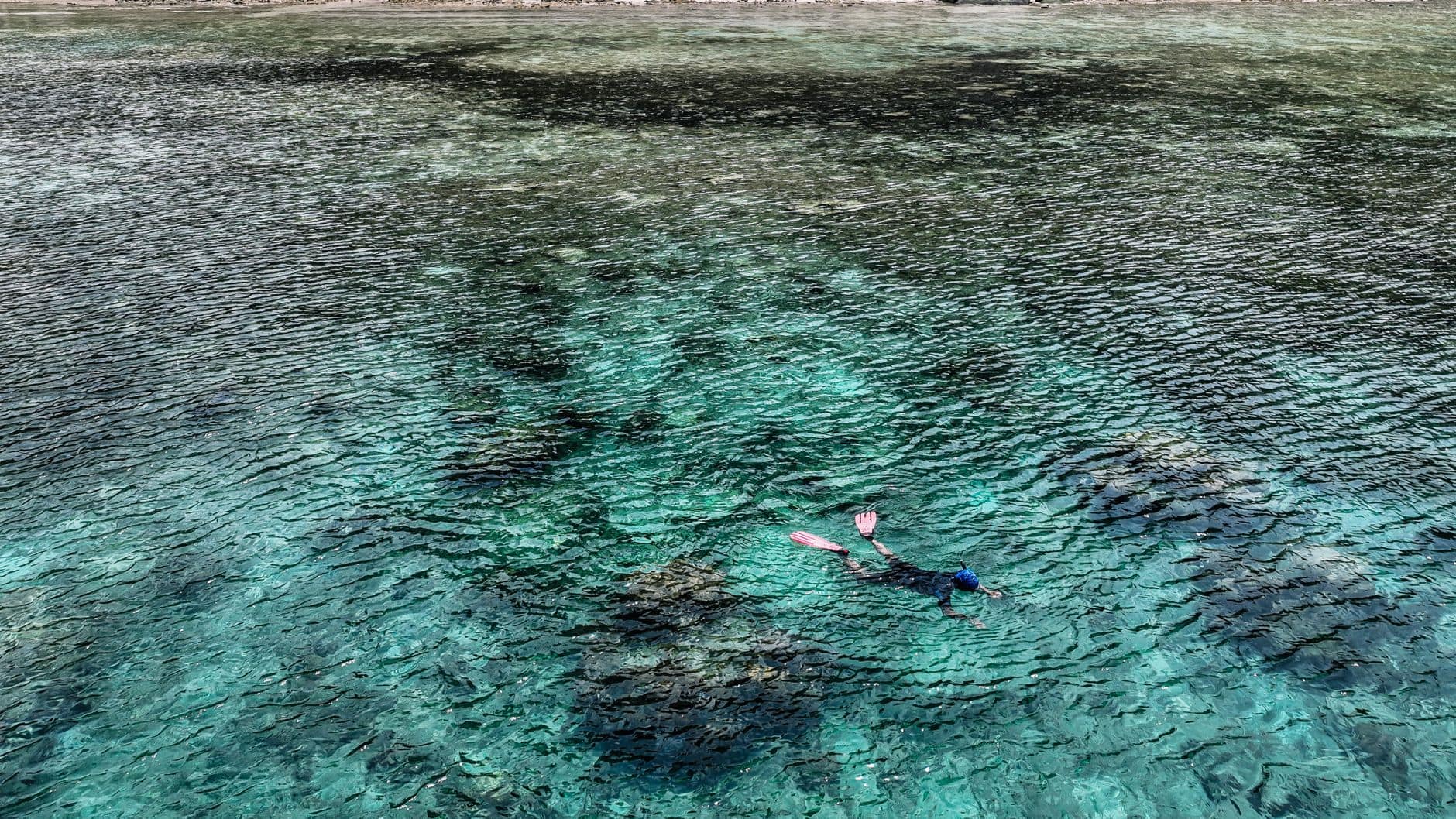
Blue Lagoon Snorkeling, Padang Bai
This is one of the easiest snorkeling products to recommend for beginners and casual sea-day travelers. It gives you underwater visibility, reef-life value, and a cleaner half-day or lighter full-day structure than more demanding offshore routes.
Open tour page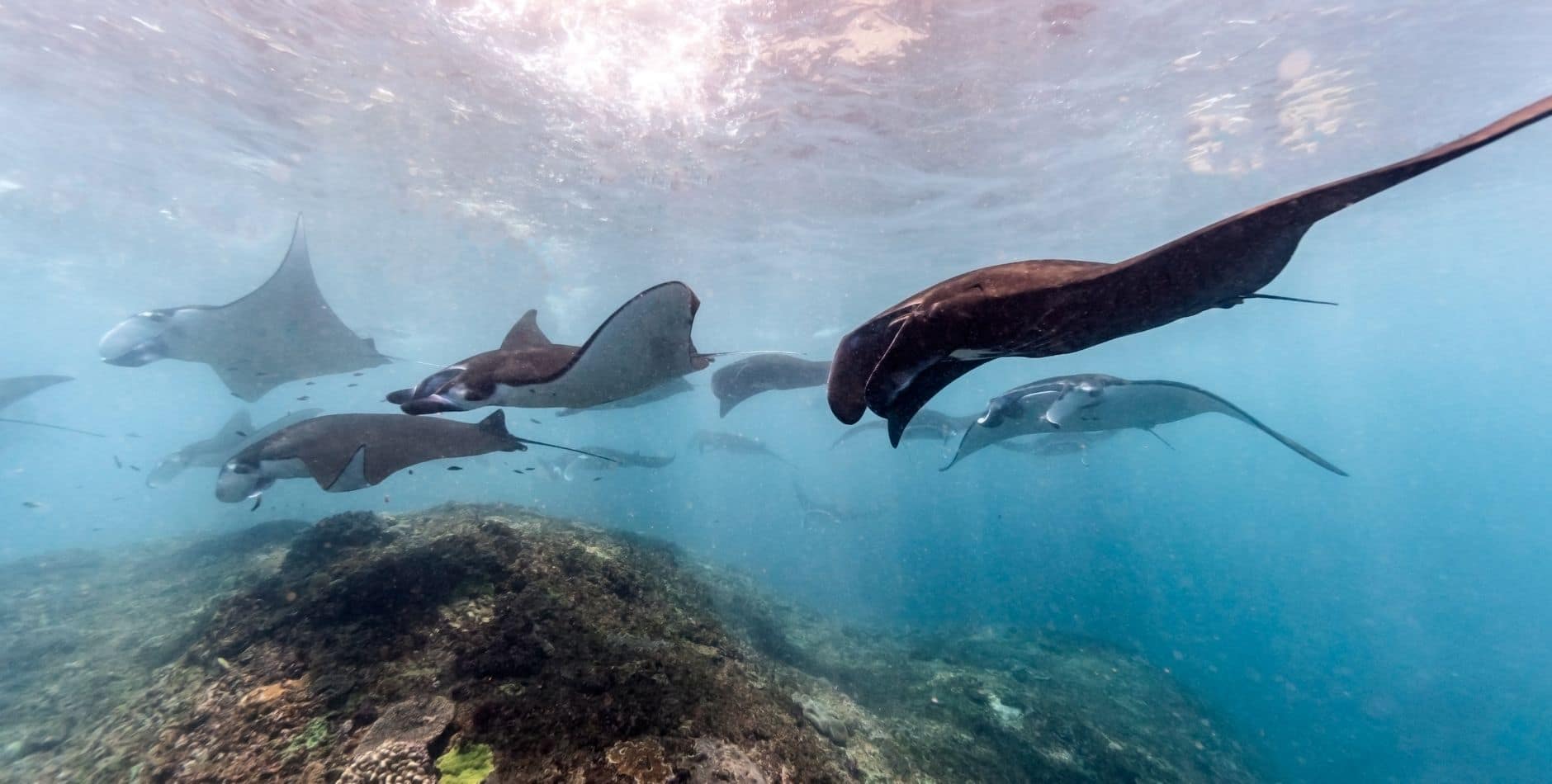
Snorkel with Manta Rays, Nusa Penida
This is one of Bali's strongest sea-day products because the experience starts delivering early and stays visually powerful all day. It works for couples, small groups, and first-time snorkelers who want clear planning and strong photo value.
Open tour page
Gili Islands Private Snorkeling Day Trip
This route is built for travelers who want turtles, clear water, and a real Gili Islands experience without organizing fast boats, harbor flow, snorkeling logistics, and local coordination on their own. The private snorkeling setup makes the day feel cleaner and more premium than a basic shared island transfer.
Open tour page